TrailMark Archive Edition

Arkansas | Ouachita

Hot Springs

A federal reservation on April 20, 1832. The 18th national park on March 4, 1921.

Archive No. TM-HOSP-042

National Park since 1921

Collection Bathhouse Row

Park Overview

Reserved in 1832, named a park in 1921

On April 20, 1832, President Andrew Jackson set aside the hot springs. On March 4, 1921, the reservation became Hot Springs National Park, the 18th national park.

The history page says the 1832 law reserved four sections of land, including the springs, for the future disposal of the United States and not for any other purpose. It calls this the oldest national park among current units, forty years before Yellowstone, and it also says Congress passed no administration for years, so people built over the springs anyway.

A centennial release says 47 hot springs emerge at the base of Hot Springs Mountain, and that the water is about 4,400 years old. A brochure puts the forested park at 5,500 acres around the downtown. The homepage says there are 26 miles of hiking trails.

Emotional Thesis

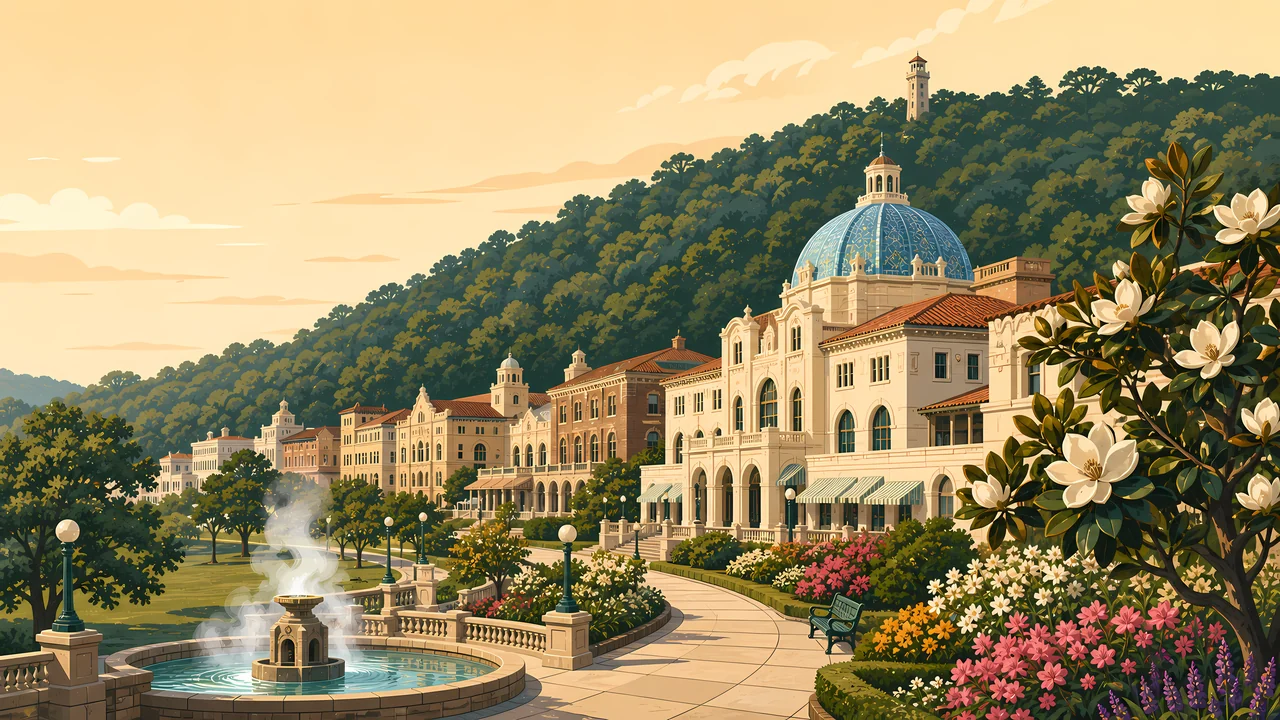
The header is a row of bathhouses, because the water was never left alone.

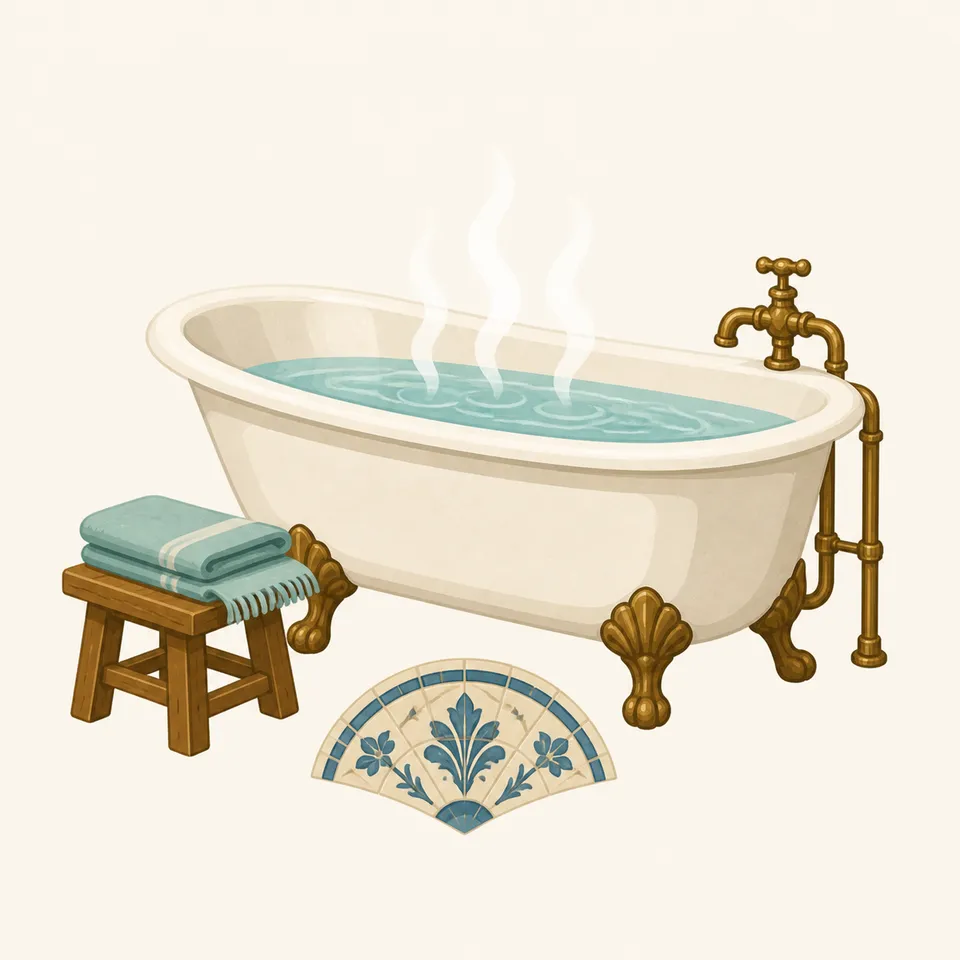
A steaming fountain sits in front of tiled roofs, with a wooded mountain behind them. The history page says Bathhouse Row's last great house, the Lamar, opened in 1923, and that the houses still stand. The extra drawing is the tub those houses were built around.

The brochure says this was the first U.S. reservation made simply to protect a natural resource. The town grew up against it. The park and the city share a name on purpose: in 1921 the townspeople called the city Hot Springs National Park as well.

Landscape Highlights

Row, mountain, and a downtown that is the boundary

01

Bathhouse Row

The history page treats the row as the final form of the spa. The plan-your-visit page says there is no outdoor soaking in the springs, and that baths are offered in bathhouses. Which houses are open, and what they charge, is theirs to say.

02

Hot Springs Mountain

The 47 springs come out at the base of the mountain. The brochure's 5,500 forested acres and the homepage's 26 miles of trail are the wild half wrapped around the row.

03

The public water

The centennial release says the springs are the only federally controlled hot springs in the United States managed for both public health and use, and that visitors can fill vessels from them. Fountains and jug rules are on the park site.

Hidden Discoveries

Dunbar and Hunter, a free bathhouse, and a row that was not for everyone

01

1804

The brochure says Jefferson sent William Dunbar and George Hunter after the Louisiana Purchase. Their report called the place the hot springs of the Washita. In 1820 the Arkansas Territory asked Congress to reserve them. Asa Thompson built the first bathhouse near today's Fountain Street in 1830.

02

Unequal access

The same brochure says minorities did not have equal access to Bathhouse Row, and that African American-owned bathhouses opened nearby beginning in 1905. The grand row is not the whole bathing history.

03

The free bathhouse

The history page shows a government bathhouse under construction in 1921, sometimes called the government free bathhouse. Stephen Mather, the new Park Service director, pushed the reservation into the park system that same year.

Wildlife

A city park with a forested mountain

The pages used here are about water, bathhouses, and the mountain forest. They do not give a wildlife census, so this essay does not invent one.

A clawfoot bathtub with steam rising, the extra drawing for the park.
Bathhouse tub

01

The extra drawing is a tub, not an animal. That is the right object for this park.

02

Novaculite on the hilltops drew people for thousands of years, the people page says, along with the hot and cold water. That is a human use, not a species list.

03

The 26 miles of trail are where the forest is. What lives there is the park's nature page, not a guess from the painting.

Geology

Water that the park says is about 4,400 years old

The experience-the-water page and the centennial release both describe thermal water about 4,400 years old. A geology link on that page says the story begins with rocks more than 400 million years old. This essay does not retell the plumbing.

01

Forty-seven springs at the base of the mountain is the centennial count.

02

The 1832 reservation was four sections. The brochure's modern forest is 5,500 acres. Those are not the same measurement, and they are not averaged.

03

The fountain in the header is the public display of water that also filled the tubs.

A park you can walk in any month, with a mountain behind the row

The row

Bathhouse hours and which houses offer baths change. The plan page is the source. This essay does not freeze a price.

The trails

Twenty-six miles of trail are the homepage's figure. Heat on the mountain and ice on the steps are ordinary seasonal facts. Check the day.

The water

The springs do not take a season off. Collecting water, if it is offered, follows the current fountain rules.

The city

The park is downtown. Metered parking and the surrounding streets are part of arriving. They are not a wilderness approach.

Photography

Show the mountain behind the roofs

A facade alone is a city block. The 1832 reservation was the water and the hills.

01

Steam

The fountain in the header is doing the geologic work. Include it or a jug line if one is open.

02

The row is occupied

Bathhouses are businesses and historic buildings. Photograph from the public walk.

03

Do not soak for the picture

The plan page says there is no outdoor soaking in the springs. The tub in the drawing is indoors.

Field Notes

Field Notes

They reserved the water forty years before Yellowstone, and then had to spend a century pulling buildings back off the springs.

TrailMark Field Notes

Hot Springs National Park badge

Badge Story

A bathhouse facade and a wooded mountain

The mark is the row against the hill, with steam. A wilderness circle would deny the downtown.

Tiled roof, a dome, and rising water.

The tub is the object. There is no animal that carries this park.

Do not borrow a western canyon. The stone here is the mountain behind the town.

Archive No.042

LocationBathhouse Row

ReleaseBath Mark

Stewardship / Safety

Public water, private bathhouses, and a mountain trail

The 1832 idea was public use of the springs. How you bathe now is a current rule on the NPS page.

  1. 01

    Do not climb into a spring. The plan page says soaking is in bathhouses, not outdoors.

  2. 02

    Historic houses are cultural resources. The unequal-access story is part of why a single pretty row is not the whole history.

  3. 03

    Collect water only where the park says you may.

  4. 04

    The forest trails are still a mountain. Heat and footing are the ordinary hazards.

Current conditions, fees, and alerts are on the National Park Service site.

Continue the Archive

Gateway Arch is the other downtown national park already open.

One is a steel curve on the Mississippi. This one is thermal water under a bathhouse row. Indiana Dunes, in this batch, is the lakeshore park.