TrailMark Archive Edition

Colorado | Front Range

Rocky Mountain

Legislation signed on January 26, 1915, and a dedication on September 4, with the high country still the reason.

Archive No. TM-ROMO-025

National Park since 1915

Collection Front Range

Park Overview

Signed in January, dedicated in September, both in 1915

Rocky Mountain National Park legislation was signed on January 26, 1915, and the park was dedicated on September 4, 1915.

An NPS education guide for the park places those two dates on the 1915 line of its timeline. The people page shows the dedication photograph: Enos Mills, F. O. Stanley, Ed Taylor, Mary Belle King Sherman, and Governor George Carlson.

Mills is called the father of the park in that guide because he led the campaign. Sherman used the Federated Women's Clubs to build public support and later worked for Grand Canyon and five other parks. The park was not one person's signature. It was a lobby.
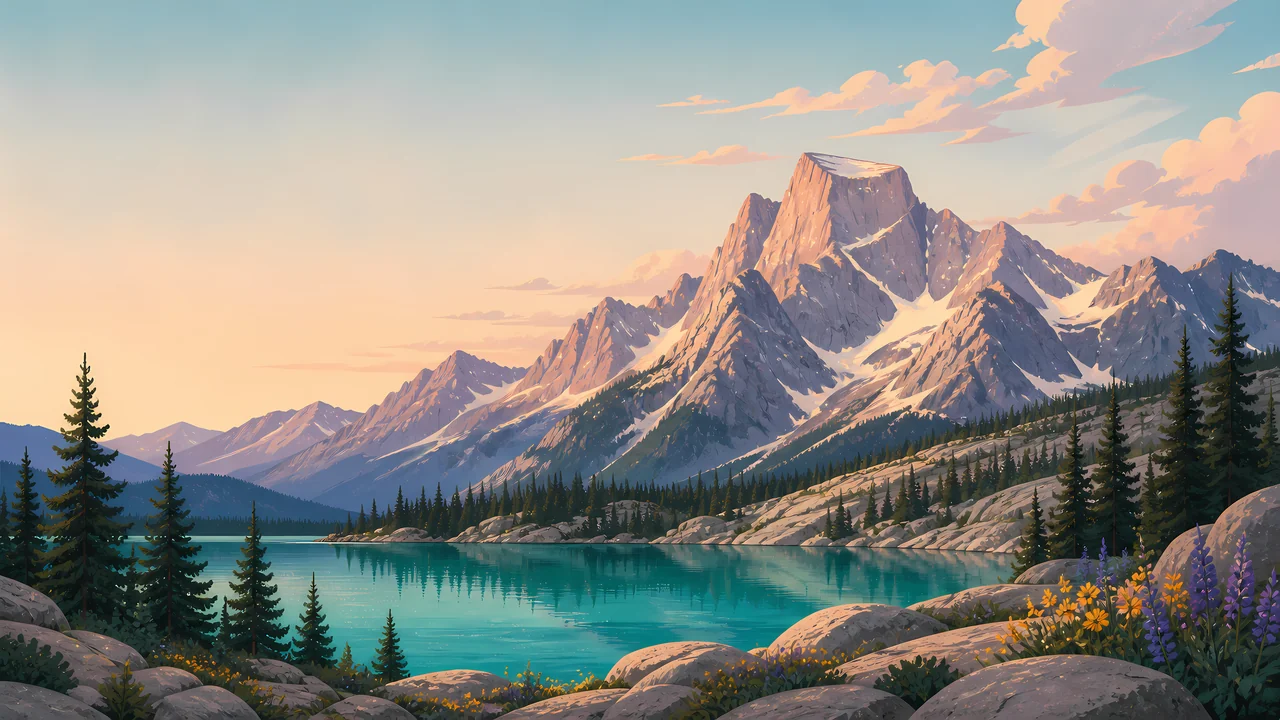
Emotional Thesis

The lake in the painting was argued for before it was managed

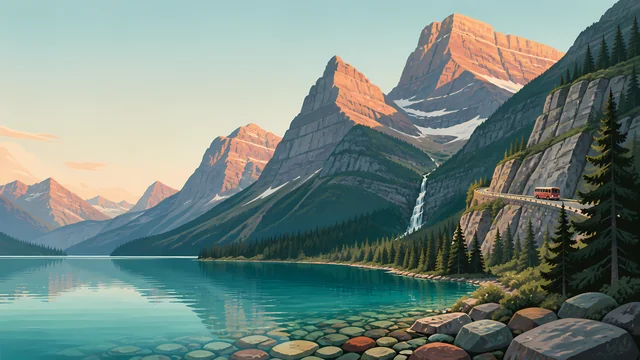
The header is a high lake under a sharp peak. That is the picture the campaign was selling. The people page is the less painted half: innkeepers, club women, and nature guides who made the place legible to Congress.

Isabella Bird, writing to her sister and later in A Lady's Life in the Rocky Mountains (1879), said of the Estes Park country, "The scenery is the most glorious I have ever seen, and is above us, around us, at every door." NPS quotes her. The park came decades after the sentence.

Landscape Highlights

A valley already famous, a peak already climbed, a road that came later

01

Estes Park before the park

Bird reached Estes Park in the 1870s, stayed at Griff Evans' cottage camp, and climbed Longs Peak with Jim Nugent. Anna E. Dickinson had been on the peak a month earlier, with the Hayden survey. The valley was a destination before it was a boundary.

02

The dedication group

September 4, 1915 put Mills, Stanley, Taylor, Sherman, and the governor in one photograph. Stanley had opened his hotel on July 4, 1909, according to the education timeline. The built valley and the protected valley arrived together.

03

Fall River Road

Crews from west and east met in September 1920 to finish Fall River Road, the first automobile road in northern Colorado over the Continental Divide between Grand Lake and Estes Park. The high lake in the painting is older than the road that let most people see one.

Hidden Discoveries

Guides, a lodge that became a visitor center, and a geology ranger

01

The Burnell sisters

In 1917 Elizabeth and Esther Burnell passed an exam Enos Mills encouraged and were licensed as nature guides. Elizabeth became the first woman guide on Longs Peak. Esther later ran Longs Peak Inn after Mills died in 1922.

02

Moraine Park Lodge

Imogene Green MacPhearson patented a homestead in 1903 and opened Moraine Park Lodge to guests in 1910. The Park Service bought the property in 1931. The Assembly Hall, built in 1923, became the Moraine Park Visitor Center.

03

Margaret Fuller Boos

In 1928 she became the park's first female ranger-naturalist, with a geology PhD, and ran the interpretive program for two summers. Women were not given the title Park Ranger for several decades after. She wrote for Nature Notes and a geology guide, then turned down a permanent post.

Wildlife

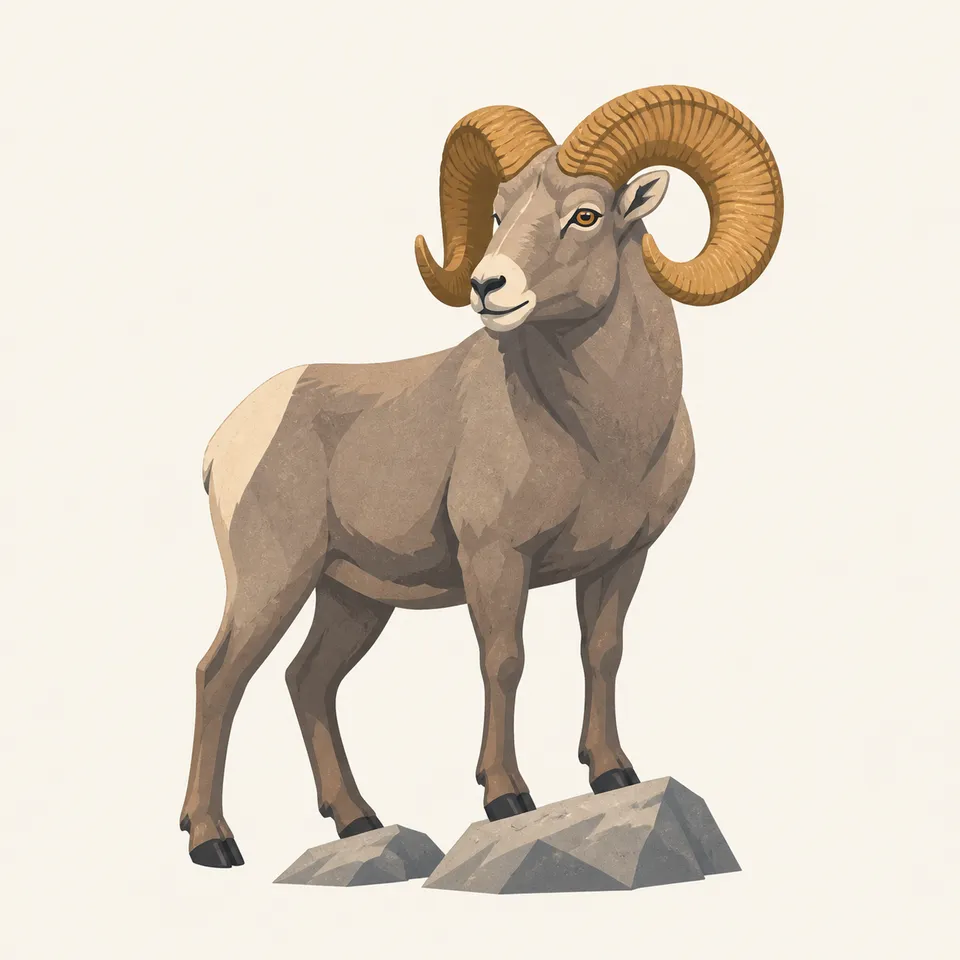
The bighorn is the drawing. The pages opened here are about people.

The extra illustration is a bighorn on granite. The history pages used for this essay do not give a population, so the animal stays the archive image.

A bighorn stands on granite, the extra drawing for the park.
Bighorn

01

Do not treat the drawing as a count of sheep, elk, or anything else.

02

The cultural collections hold over 44,000 items. That figure is from the history index, and it is about study, not about a trail.

03

A nature census belongs on the NPS animals page for the day you need it. It was not copied here.

Geology

A Front Range story told by a ranger who also wrote it down

Boos came to the park with a geology dissertation and left a guide and lantern slides. This essay does not add peak elevations the opened pages do not state.

01

The education timeline notes mining on the east side, including the Eugenia and Meeker mines, from 1896 to 1902, and the Grand Ditch built to move water from the Never Summer Range.

02

Those are human cuts in the geology. They are part of why a park was argued for.

03

Longs Peak is the climb in Bird's story and in the Burnells' guiding. A height for it is left off this page.

A high park with a road report

Winter

The information office keeps shorter weekend hours in winter, and Trail Ridge Road has its own recorded line. Both are on the NPS contact block. Do not guess the pass from a summer painting.

Spring

Melt decides when the high lakes in the header look like the painting. Lower valleys open first.

Summer

This is when the Moraine Park Visitor Center sees the crowd the lodge was built for. Reservations and full trailheads are current NPS news, not a fixed fact.

Autumn

The dedication was in September. It is still a serious month in the high country. Check the road before you aim at the divide.

Photography

A lake under the peak, the way the campaign saw it

Bird's sentence was about scenery at every door. The header is that idea: water, spruce, and one sharp summit.

01

Summit in the frame

Crop too low and you have a lake that could be anywhere in the Rockies.

02

People are the other picture

The dedication group and the guides are the history. A portrait of a historic cabin, where the park allows it, belongs with the scenery.

03

Do not stage the sheep

The bighorn drawing is not a reason to approach animals.

Field Notes

Field Notes

The scenery was already famous in a book from 1879. The park was the decision, decades later, to keep it.

TrailMark Field Notes

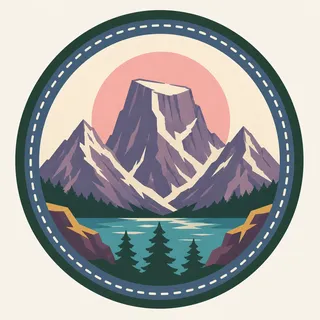
Rocky Mountain National Park badge

Badge Story

One peak, one lake, Front Range spruce

The badge should read as a high Colorado lake, not as the Tetons and not as a desert canyon with a puddle.

A single sharp summit over turquoise water.

Spruce, not sagebrush. Sagebrush is the valley at Grand Teton.

The bighorn can be the extra plate. The badge is the lake and the peak.

Archive No.025

LocationFront Range

ReleaseDivide Mark

Stewardship / Safety

The high country is why the park exists, and it is still weather

Trail Ridge status and the information office hours are printed by NPS because they change. Follow those, not a memory of September.

  1. 01

    Stay on the trail. The Grand Ditch and the old mines are history, not a cross-country route.

  2. 02

    Give animals room. The bighorn in the drawing is an illustration, not a model for how close to stand.

  3. 03

    Historic buildings such as the Moraine Park Visitor Center are the cultural resource. The collection is over 44,000 items. Leave objects where they are.

  4. 04

    Afternoon storms and a closed road are the same kind of fact. Check NPS the day you go.

Current conditions, fees, and alerts are on the National Park Service site.

Continue the Archive

The Tetons are the next range south of this idea, and a different park.

Grand Teton, in this batch, is the fault-block skyline over Jackson Hole. Great Sand Dunes is the San Luis Valley. Black Canyon is the gorge.