TrailMark Archive Edition

Florida | Garden Key

Dry Tortugas

Fort Jefferson National Monument on January 4, 1935. Dry Tortugas National Park on October 26, 1992.

Archive No. TM-DRTO-036

National Park since 1992

Collection Garden Key

Park Overview

A monument in 1935, a national park in 1992

Fort Jefferson National Monument was designated on January 4, 1935. Congress redesignated it Dry Tortugas National Park on October 26, 1992.

The history page says the monument comprised 47,125 acres, was expanded in 1983, and became a park to protect island and marine ecosystems, Fort Jefferson, submerged cultural resources such as shipwrecks, and regulated public access. The keys sit about 70 miles west of Key West.

Seven keys make the Dry Tortugas: Garden, Loggerhead, Bush, Long, East, Hospital, and Middle. The park homepage calls the whole place about 100 square miles, mostly open water. Fort Jefferson, on Garden Key, is described there as the largest masonry structure in the Americas, more than 16 million bricks.

Emotional Thesis

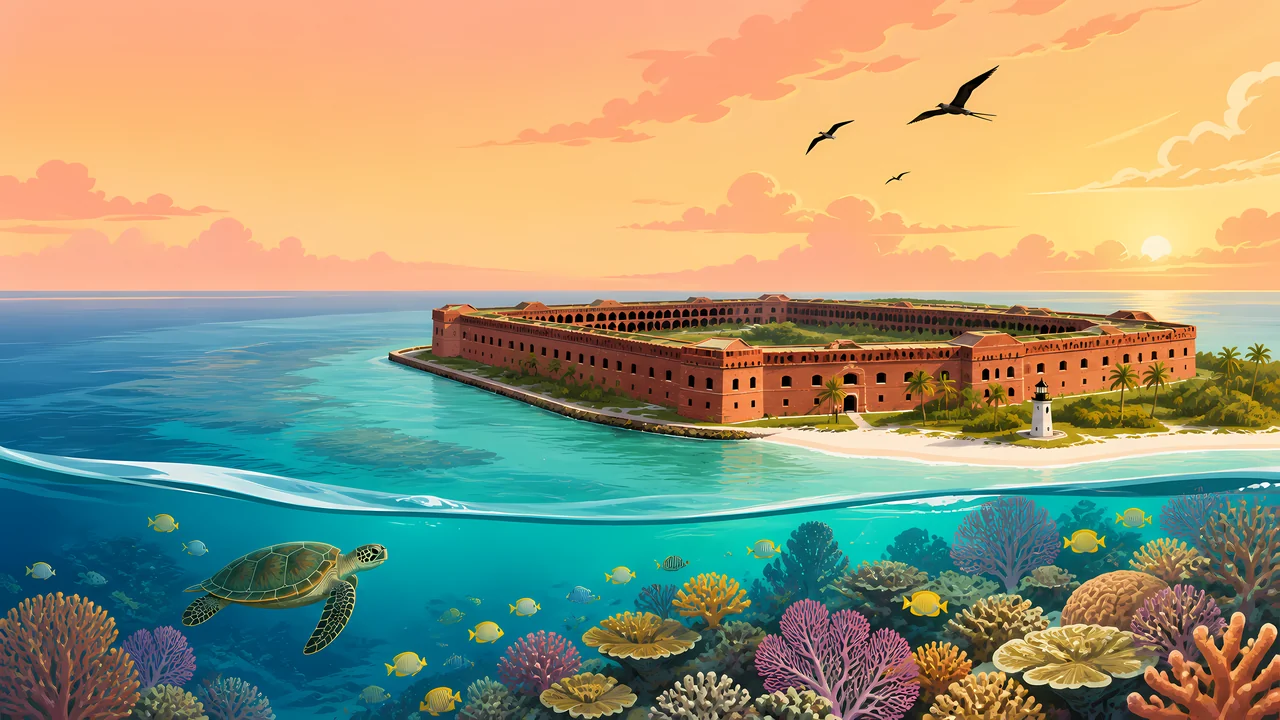
The fort is unfinished. The reef under it is the other half of the park.

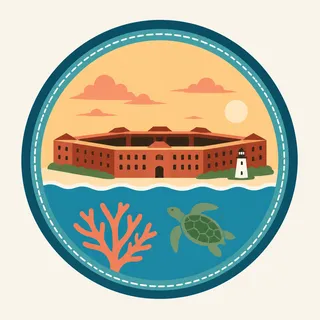
The header splits at the waterline: a brick hexagon on a small island above, a turtle and coral below. Construction ran from 1846 to 1875 and was never completed. Weapon technology had made the fort obsolete by 1862, one history page says. The Army abandoned it in 1874.

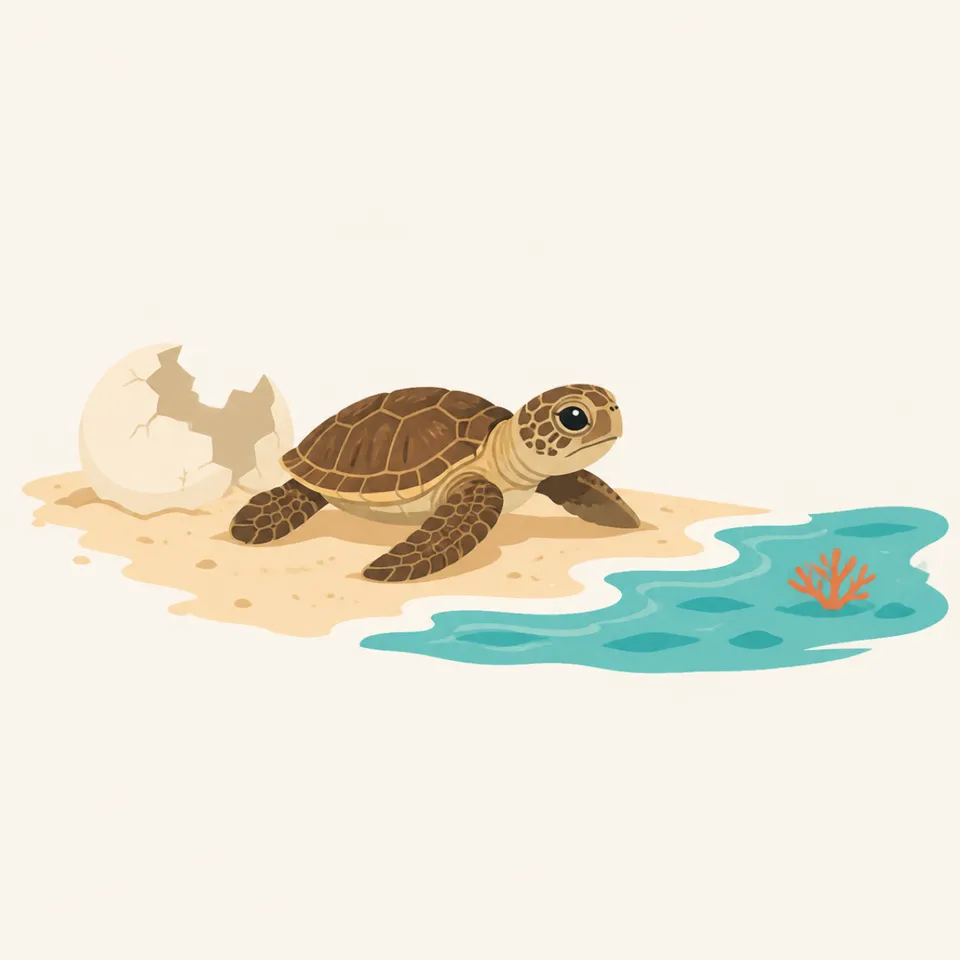
The name is older than the bricks. Ponce de León called the islands Las Tortugas in 1513. Charts added Dry because there was no fresh water. The hatchling in the extra drawing is that name, not a nest count.

Landscape Highlights

Garden Key, Loggerhead, and a moat around a brick hexagon

01

Fort Jefferson

The history page calls it the largest all-masonry fort in the United States, built to hold the shipping channel. The enabling law tells the Park Service to protect, stabilize, restore, and interpret it. The painting shows the unfinished ring, not a restored fantasy.

02

Seven keys

Garden Key holds the fort. Loggerhead is the largest of the seven, the basic-information page says, and it carries the taller lighthouse begun in 1856 after the Garden Key light proved too short and too dim.

03

The reef line

The homepage points to coral and to more than 300 sunken ships. The enabling purposes name an intact coral reef community and loggerhead and green sea turtles. The water in the header is that half of the law.

Hidden Discoveries

A prison doctor, a harbor the Maine left, and bricks that salt eats

01

Dr. Samuel Mudd

After the Civil War the fort was a federal prison. Mudd, the physician who set John Wilkes Booth's broken leg, was held there. During an 1867 yellow-fever outbreak he helped the prison doctors. His sentence was commuted two years later. The fort page also says the prison held mostly Union deserters, and that four men convicted of complicity in Lincoln's assassination were kept there.

02

The Maine

The fort page says the USS Maine sailed from the Tortugas in 1898 on the voyage to Havana. The harbor had been a coaling station after the Army left in 1874.

03

Sixteen million bricks

The homepage figure is the scale. Salt, heat, and storms are why stabilization is permanent work. The preservation page says the law requires the fort to be protected, not rebuilt as new.

Wildlife

Turtles and terns named in the law

The enabling page lists loggerhead and green sea turtles, sooty terns, frigate birds, and numerous migratory birds among the populations the park is managed to protect.

A sea turtle hatchling crossing sand toward the water, the extra drawing for the park.
Hatchling

01

The extra drawing is one hatchling on sand. It is not a nesting survey.

02

A 1908 wildlife refuge, noted on the park map and guide, was meant to protect the sooty tern rookery from egg collectors. That is the bird history before the monument.

03

Fish and the reef are the rest of the purpose statement. A count of either was not copied from a species table.

Geology

Coral keys, sand, and a channel worth a fort

The basic-information page says the seven islands are coral reefs and sand, with shoals and water around them.

01

The strategic fact is the channel, not a mineral. The fort page calls the harbor one of the most important deepwater anchorages in North America in the nineteenth century.

02

Shipwrecks, more than 300 on the homepage, are what the reefs did to traffic. They are cultural resources now.

03

No fresh water is why the charts say Dry. Bring the plan the park posts. This essay will not invent a cistern.

A park you reach by boat or seaplane

The crossing

The homepage says the park is accessible only by boat or seaplane. Concession schedules and private-boat rules change. They live on NPS.

Heat and salt

The preservation page names salt, heat, and storms as the fort's constant weather. A sunset in the painting is not a mild-season guarantee.

Nesting

Turtles and sooty terns are in the law. When they nest, and which beaches close, is a current notice.

Night

The homepage says the remoteness makes night-sky viewing possible. Garden Key camping rules are on the park site.

Photography

Hold the fort and the waterline together

A brick wall alone is a fortress story. Coral alone is an aquarium. The 1992 park is both.

01

The hexagon

Show enough of the ring to see that it was never finished.

02

Wrecks

More than 300 ships are a heritage trail, not a salvage invitation. The homepage names the Windjammer as one you can dive or snorkel. Follow the park's line.

03

Hatchlings

The drawing is a symbol. A real hatchling is a closed beach and a dark sky, if the park says so that week.

Field Notes

Field Notes

They built a fort the weapons outgrew, on islands named for turtles and famous for having nothing to drink.

TrailMark Field Notes

Dry Tortugas National Park badge

Badge Story

A brick ring on a reef, not a mainland fort

The mark needs the hexagon and the water. A castle on a hill would be the wrong coast.

Garden Key, moat, and a low light.

A turtle can stand for the 1513 name. It is not a count.

Do not swap in Biscayne's decorative lighthouse. This brick is a harbor fort.

Archive No.036

LocationGarden Key

ReleaseFort Mark

Stewardship / Safety

Seventy miles out, and no water of your own

The islands were charted Dry for a reason. Access, fees, and what you must carry are on the NPS page. This essay does not freeze a price.

  1. 01

    Boat and seaplane are the ways in. Weather cancels both. Have the backup the park describes.

  2. 02

    Loggerhead and green turtles are named in the law. Give nests and swimming animals the distance posted that day.

  3. 03

    The fort is a stabilization project. Closed casemates are closed.

  4. 04

    Shipwrecks and bricks stay put. The submerged resources are one of the reasons for the 1992 park.

Current conditions, fees, and alerts are on the National Park Service site.

Continue the Archive

Biscayne is the near bay. This is the far fort.

Everglades and Biscayne are already in the archive. Dry Tortugas is the park you cannot drive to.